We can’t believe we’re already five months into the Mid Sussex Reading Challenge, and we’ve read some great books on themes such as a collection of short stories and a book set in another country. The full list of challenges is available here.
In April, Claire from Hassocks chose Little House on the Prairie by Laura Ingalls Wilder as her children’s classic. Little House on the Prairie is a series of eight children’s novels published between 1932 and 1943, and Claire enjoyed reading the first in the series as her April book. Check out her review below!
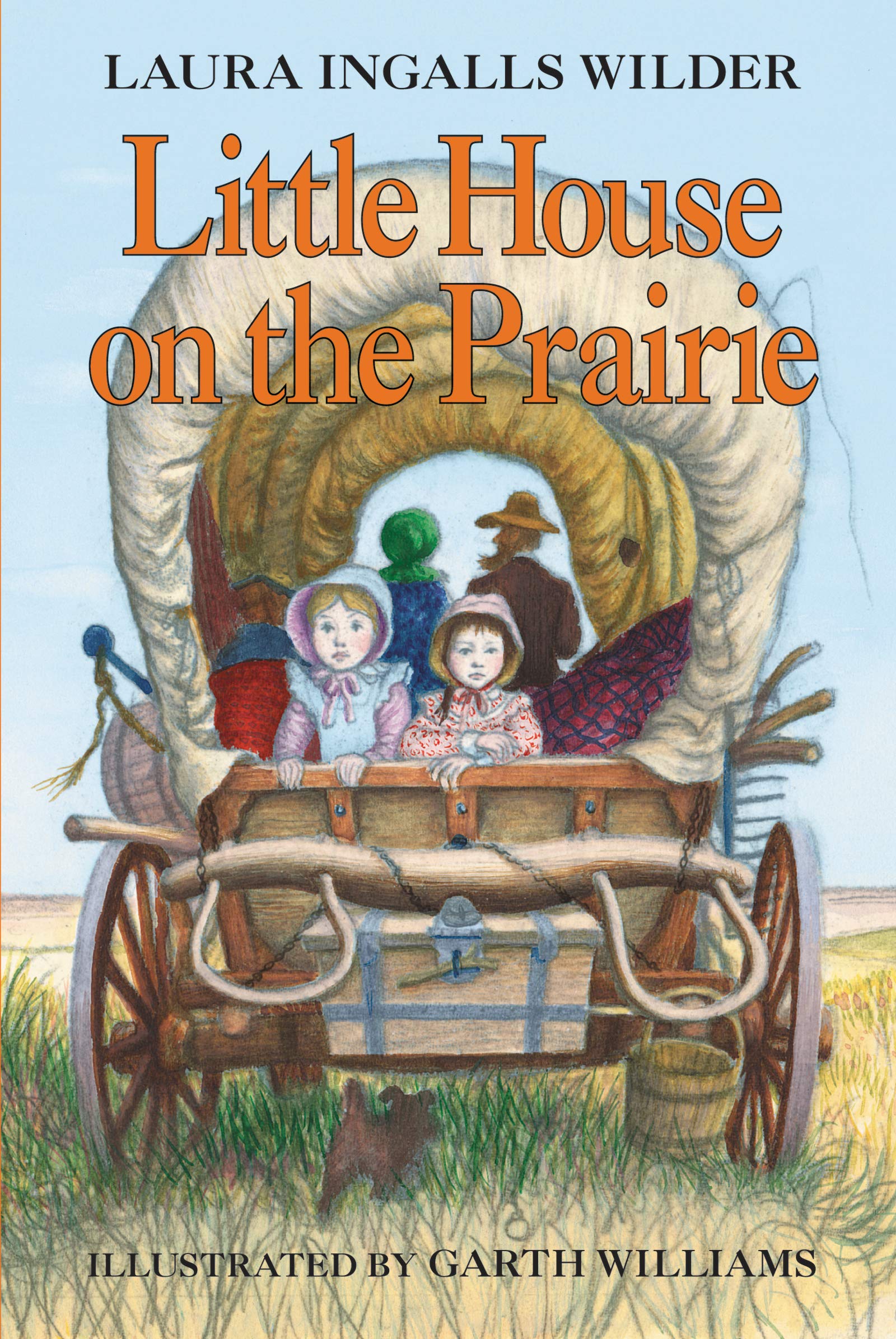
My eldest daughter has always loved the Little House books but oddly enough I have never read any, so the “children’s classic” choice was an excellent opportunity to discover the best known of the series. I enjoyed it very much.
Although the language is simple it is not patronising in tone. It is a more or less autobiographical account of a C19th family of settlers (parents and three young daughters) in the mid West of the United States. The family pitches camp seemingly in the middle of nowhere, and it is up to the infinitely resourceful father to build a house and make furniture – everything, in fact, except (apparently) a latrine.
The children’s awe at the vastness of the prairie is well conveyed, as is its beauty and surprising variety. There are dangers from prairie fires, vicious winter weather and Indians. In fact it turns out that the family has unknowingly built their house on land set apart for the Osage Indians, and they must eventually pack up and move on, leaving behind all that they had worked to achieve.
The attitudes of the family members to the (mostly unseen) Indians vary: the father is respectful and pragmatic, the mother terrified, regarding them as savages; Laura, the six year old, is fascinated by them and by the natural grace and ease with which they ride their horses without bridle or saddle. She also wants ‘a papoose’ to play with like a doll – quite unlike her little sister ‘Baby Carrie’ whose role in the story is confined to sleeping and being rocked by the mother, while eight year old Mary has little part to play except to behave well. And good manners, even – or perhaps especially – in this frontier existence are strictly insisted upon.
The contrast between the rough realities of everyday life – Laura’s mother is deeply moved when her husband makes her a rocking chair – and standards upheld from a more comfortable past is sharply drawn. I was interested to discover that Laura Ingalls Wilder’s family was connected, if distantly, to two US Presidents – Ulysses S. Grant and Franklin Delano Roosevelt.
Overall I was delighted at last to have made the acquaintance of the famous book and recognise its claim to be a classic. Facts spoke plainly; perhaps I should have liked the author to have gone a little deeper, but then that would have obscured the clear simplicity of the whole.
Have you read and enjoyed Little House on the Prairie? Keep us up-to-date on what you’re currently reading by sending in your own review, posting in our Facebook group or tweeting us @WSCCLibraries using the hashtag #MidSussexReadingChallenge.
Find out how West Sussex Libraries can support you at home, including how to access eBooks and eAudiobooks, by visiting our current offer page.
The views expressed in this review are those of the writer and do not necessarily reflect the views of West Sussex Libraries.
 Mid Sussex Reading Challenge 2020