This month, we’ve been reading books set in other countries for the Mid Sussex Reading Challenge. Local reader Wendy from Haywards Heath chose David Mitchell’s Ghostwritten, a prize-winning debut novel set in multiple locations, including Hong Kong, Tokyo, Manhattan, London and rural China. Wendy rated her latest read 3 out of 5, enjoying parts of the novel but having some faults! Read on for Wendy’s full review.
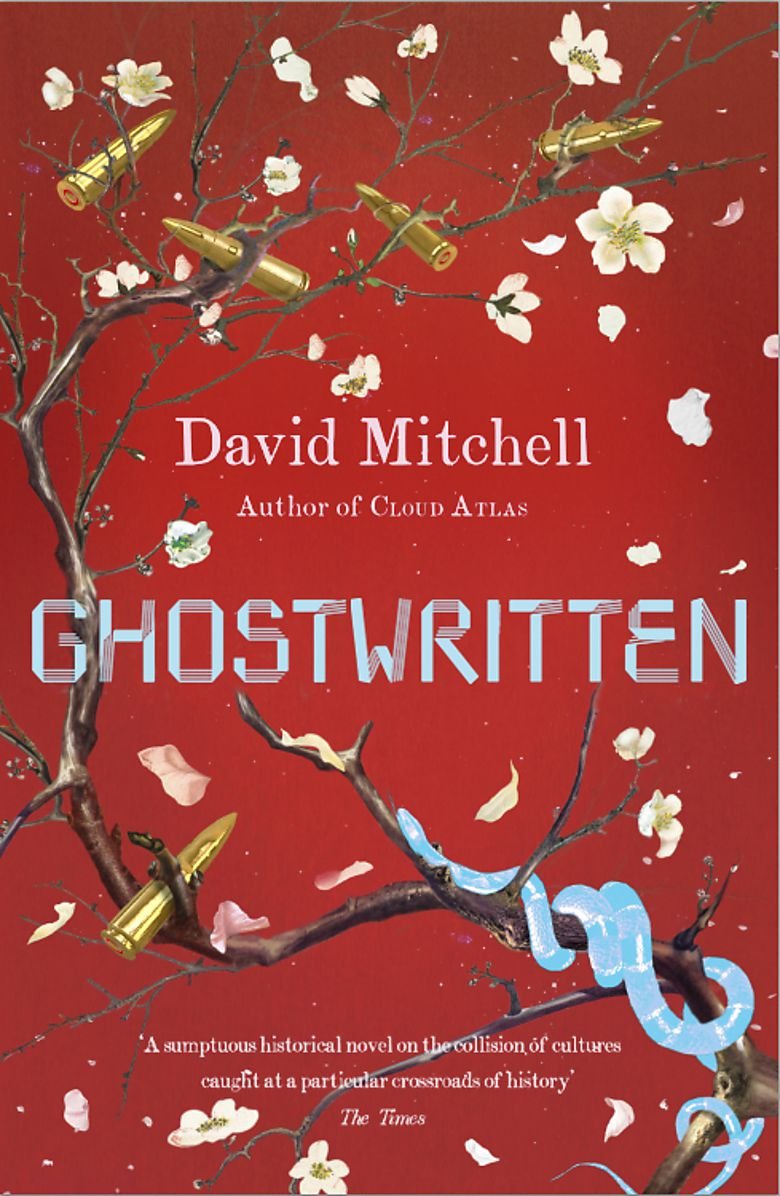
For the March Challenge, I chose Ghostwritten by David Mitchell, which, coincidentally, is a debut novel, with many of the difficulties one anticipates from debut novels. At 442 pages, it was way too long and really in need of serious editing. Mitchell says himself in the epigraph to this book that if he was writing it now he would ‘perform triage on his metaphors, redact a few gauche and blokey moments, fact-check, letting the earlier stories breathe more, while tightening the later ones.’ As a writer myself, I can relate to that! Having said that, this book is not just set in one other country but in 10, two of them being Islands.
The choice of countries was made on the basis of a 6-month backpacking trip the author made from Japan to West Cork in Ireland, touching down in Japan, Hong Kong, Mongolia and Russia, among others. Most of the characters are greatly blown-up versions of the people he met along the way.
The book itself, rather than being written by a ghost writer, contains a narrative spoken by a fantasy ghost, a bodyless persona, which can move between individuals, entering their thoughts, learning their languages and, in some cases, influencing their destinies. For some of the time this was wildly entertaining, and there are some beautifully written passages, which made me want to try a later book by this author. However, many of the transitions are confusing, and some of the characters are so bizarrely presented that they challenged my willingness to enter into the fantasy with minimal commitment.
Most successful for me were the scenes in countries where I have also spent time, such as Mongolia, where his description of the capital, Ulaan Bataar chimed very much with my own: a scruffy place full of nomadic people who really hadn’t got the hang of living in a city. The gers (similar to yurts), the families who live in them and the dreadful tracks in the Gobi desert were all accurately drawn, and even with literary exaggeration, not all that far from the reality. So, all things considered, I’m glad I read it, but would not recommend it unconditionally unless you are the sort of reader who enjoys this sort of thing.
What have you been reading this March? Let us know by sending in your own review, posting in our Facebook group or tweeting us @WSCCLibraries using the hashtag #MidSussexReadingChallenge.
If you’re stuck at home, check out our eLibrary, which has thousands of eBooks, eAudiobooks, eMagazines, eNewspapers and eComics, all completely free to borrow. You’ll need to enter your West Sussex library card number to access them, but if you’re not a library member, it’s easy and free to sign up online.
The views expressed in this review are those of the writer and do not necessarily reflect the views of West Sussex Libraries.
 Mid Sussex Reading Challenge 2020