We’ve taken on two great challenges so far for the Mid Sussex Reading Challenge – in January, we read a book that has been adapted into a film, and in February we moved onto a collection of short stories. What have you read so far?
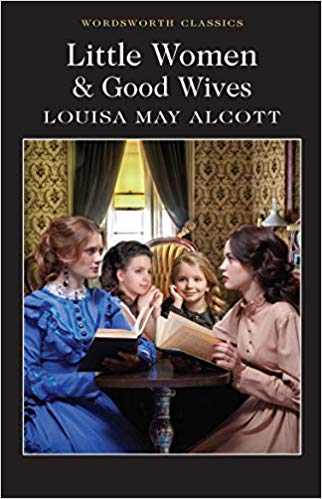
In January, Wendy from Haywards Heath read Little Women and Good Girls by Louisa May Alcott, which was adapted into the 2019 film starring Saoirse Ronan and Emma Watson. Read on to find out what she thought of both the book and its film adaptation.
Rating: 4 out of 5
Little Women is the classic family tale about 4 girls making do with their wonderful mother while their father is off doctoring during the U.S. Civil War. Set in New England, it is robustly Victorian, but even more robustly American.
I chose the book after seeing the brand new film of it, directed by the feminist director Greta Gerwig. What I didn’t realise is that the film does not end where the book of Little Women ends, but carries on into the second book of the series, Good Wives, and that is not even strictly sequential. I really had to tackle both books for this month, though I felt I could not do justice to both of them, in order to make sense of the film. Gerwig has cherry-picked what she wanted from the book to put into her film, which is as much about the main character Jo, writing the book about her family. As Alcott modelled Jo on herself, the writer, this made a certain kind of sense, but in Gerwig’s hands a piece of very fine mid-19th century writing was turned into a 21st century extravaganza, a good one, it has to be said, but a pretty wild spin on the book.
Going back to the book, I appreciated the subtlety of Alcott’s writing much more than I had when I read it first as a girl myself, and then again with my 4 daughters. What Alcott hints at, Gerwig makes manifest, and I do wonder what the author would have thought of this spectacularly beautiful film.
That the March girls were creative is, of course, very evident in the book. Their home theatre is the early arena for Jo/Alcott’s writing skills. The fact that Jo is tall and plays all the male roles in their little dramas lends weight to the idea that, modelled after the author, she was Alcott’s avatar — the writer Alcott would have been had history/culture allowed it. As it is, Alcott does not allow her to marry the wealthy, handsome boy next door, who is madly in love with her, but matches her up much later with a doughty German professor who criticises her writing harshly, causing Jo to destroy her first manuscript. The Alcott characters are all well-drawn, the sibling rivalry between the sisters. The terrible loss of younger sister Beth to a Victorian illness is drawn with minimum sentimentality and is truly touching.
Alcott’s style is lively, and it is evident from the film that Gerwig wanted it even livelier, though my preference was for the quieter exposition in the book. I don’t think Alcott has ever had the appreciation she deserved, that her work has been unfairly denigrated to women’s romantic/period fiction. If, as it should do, the film sends readers back to the books, it will have served an excellent purpose, which, to a degree, the several previous film versions may have done. Over time Alcott is coming into her own, and not before time, say I.
Reserve your copy to collect from any West Sussex Library by visiting our library catalogue.
What have you been reading recently? Let us know by submitting your own review, posting in our Facebook group or tweeting us @WSCCLibraries using the hashtag #MidSussexReadingChallenge.
The views expressed in this review are those of the writer and do not necessarily reflect the views of West Sussex Libraries.
 Mid Sussex Reading Challenge 2020